
Mont-Saint-Michel: A Complete Guide to the Abbey, the Bay & the Tides
The history, the tides, and how to visit — plus a self-paced audio tour for the walk itself.
Hear the guide before you go
A 30-second sample — the same voice that walks you from the shore to the abbey.
What Is This Tour?
A self-guided audio tour you play on your phone as you walk. An offline GPS map shows where you are, and you start each story yourself when you reach the spot — so you keep your eyes on the abbey, the bay and the ramparts, not on a screen. Buy once, use offline, keep it for a year.
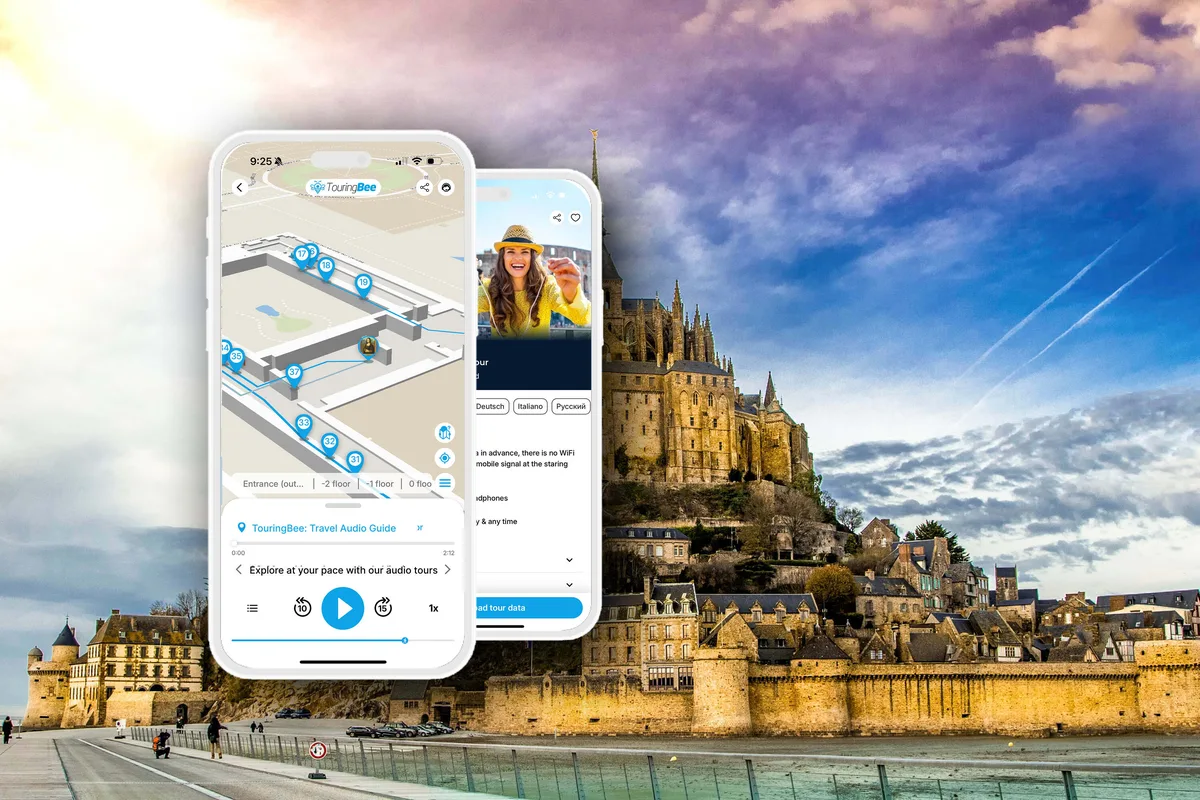
Mont-Saint-Michel Self-Guided Audio TourInstant access
- 100% offline — no Wi-Fi or data needed
- Offline GPS map — you start each track yourself at the spot
- 8 languages, real voice narration
- Works on iOS & Android
- Self-guided, around 2–3 hours
Why Visit Mont-Saint-Michel?
Mont-Saint-Michel is not just an abbey on a rock. It is a thousand years of monks, pilgrims and prisoners, one of the fastest tides in Europe, and a single street that climbs from the sea to the sky — all stacked on one island the size of a village square.
Rising from a wide bay on the border of Normandy and Brittany, the Mont has pulled travelers toward it since the 8th century. A Benedictine abbey crowns the summit; a lone medieval street winds up to it past houses that once fed and sheltered pilgrims. Twice a day the sea sweeps across the bay, and on the biggest tides the rock becomes a true island again. It is one of the most visited monuments in France and a UNESCO World Heritage Site — and the stories behind it are stranger than any postcard lets on. This guide walks you through what the Mont is, why it looks the way it does, when to come, and how to make the most of a day there.
The Story of Mont-Saint-Michel
An Archangel and a Hole in a Bishop's Skull
The Mont's story starts, as the best ones do, with a stubborn man and a bad dream. In the year 708, according to the tradition, the Archangel Michael appeared to Aubert, the bishop of nearby Avranches, and told him to build a church on the rocky tidal island then called Mont-Tombe. Aubert ignored him. Michael came again. Aubert hesitated again. On the third visit, the story says, the archangel pressed a finger to the bishop's head and left a hole in his skull to settle the argument. A skull with a curious hole is still kept as a relic in Avranches. Whatever you make of it, Aubert built his oratory — and the most improbable building site in France was born.
Building the Impossible: the Abbey and La Merveille
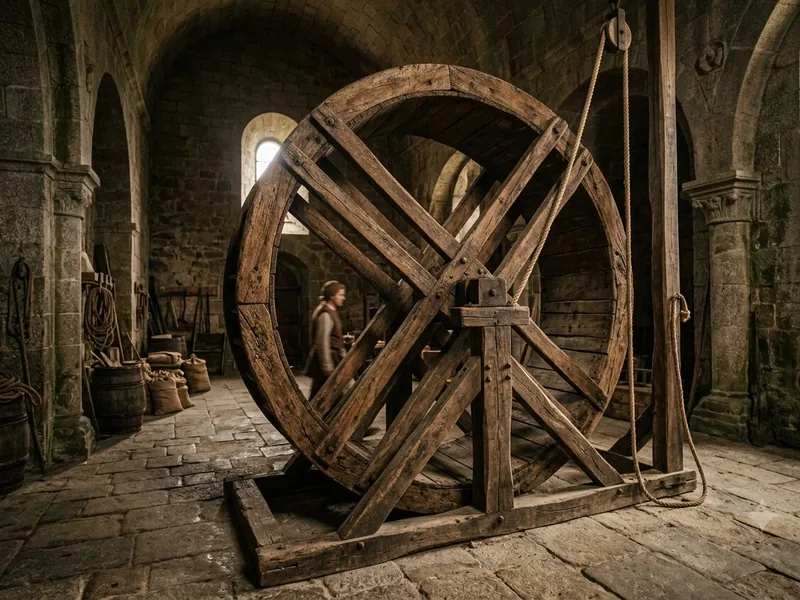
Constructing anything on a steep granite cone surrounded by quicksand and racing tides should not have worked. It took centuries. Benedictine monks settled in 966 and began raising a Romanesque abbey directly on the summit, propping the church over crypts that carry its weight down the rock like the roots of a stone tree. Then, in the early 13th century, after a fire and a change of rulers, the monks built the part that still stops people in the courtyard: La Merveille, "the Marvel." Three Gothic floors — almonry, guest halls, refectory and a cloister that seems to float — stacked vertically against the cliff. Medieval engineers hauled the stone up with a treadwheel crane powered by men walking inside a giant wooden wheel; a later version still hangs in the abbey. It is one of the boldest pieces of medieval architecture in Europe, and it was built by hand, on a rock, against the sea.
Hear how they built it — story by story, right where it happened. From €9.99 · offline · in English
Get the Audio GuideThe Pilgrims Who Called It the Path to Paradise
For over a thousand years, Mont-Saint-Michel was one of the great pilgrimage destinations of the Christian West, ranked with Rome and Santiago. Pilgrims — the miquelots — crossed the bay on foot at low tide along a route they called the Chemin de Paradis, the Path to Paradise. The name was hopeful and also literal: the crossing could kill. Fog erased the shoreline in minutes, the returning tide arrived without warning, and quicksand waited in the flats. This is why a bay guide has been a real profession here for centuries, and why the safest way to cross the sand today is still with a licensed one. Even children were sent on the pilgrimage in the 15th century, in movements the chronicles called the "shepherds' crusades."
When the Sacred Mount Became a Prison
Fortified during the Hundred Years' War, the Mont held out against English sieges when much of Normandy had fallen — its walls were never taken. But its darkest turn came later. After the French Revolution the monastery was closed and the buildings were turned into a prison, nicknamed the Bastille des mers, the "Bastille of the seas." For roughly seventy years, priests, political prisoners and common convicts were held inside the Gothic halls where monks had once prayed. The prison closed in 1863, and a restoration campaign eventually returned the Mont to something like its former self — crowned, in 1897, by the gilded statue of Saint Michael that still catches the last light of the day from the tip of the spire.
The Fastest Tide in Europe
The bay around the Mont has one of the largest tidal ranges on the continent — up to around 14 metres between low and high water, roughly the height of a four- to five-storey building. The sea retreats several kilometres and then returns across a nearly flat seabed, which is why the old saying claims it arrives "as fast as a galloping horse." That line exaggerates the speed, but not the danger: the water fills the channels behind you first, quietly cutting off the way back. On the biggest tides — the grandes marées — the sea rises high enough to surround the rock completely and, for a few hours, make it an island as it was for the pilgrims. A modern bridge (the passerelle), opened in 2014 to let the tides flow freely again, now carries visitors across without a road blocking the water.
Read the full guide to the tides → — when the Mont becomes an island, the best time to watch, and how to stay safe.
Planning Your Visit
How Long You Need
Plan at least half a day. Two to three hours is enough to climb through the village, tour the abbey and walk the ramparts. Give it longer — a full day, or a night on or near the Mont — if you want to see it both with the day-trippers gone and with the tide moving. The single main street, the Grande Rue, funnels almost everyone the same way, so the earlier or later you go, the more room you have.
Best Time to Come
Early morning and the last hours before closing are the calmest and the most photogenic; the middle of the day, especially in summer, brings the coaches. For the tide at its most dramatic, aim for a strong-coefficient day around the spring or autumn equinox, and check the timetable before you travel. Late September is a sweet spot: powerful tides, softer light, and thinner crowds than July or August.
Where the Abbey Fits
Walking the island, its streets and ramparts is free. The abbey at the top charges a separate entry ticket, and it is the part most worth paying for — the church, La Merveille and the cloister are the payoff for the climb. Everything about the day works better if you anchor it to the tide and the light rather than a fixed clock.
Where to Stay
Staying on the island or at the mainland car park (La Caserne) lets you see the Mont after the day-trippers leave and before they arrive — the two calmest, most photogenic windows of the day. Check hotels near Mont-Saint-Michel on Booking.com →
What You'll Discover on the Tour
A handful of the places and stories waiting on the rock — the full route unfolds in the guide as you walk.
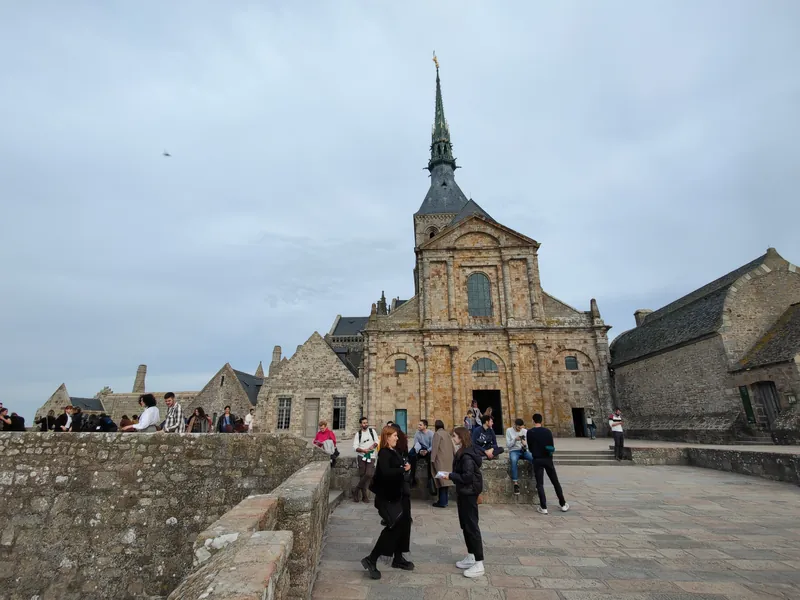
The Abbey Church
Built on the summit of the rock, higher than any sane medieval builder should have dared.
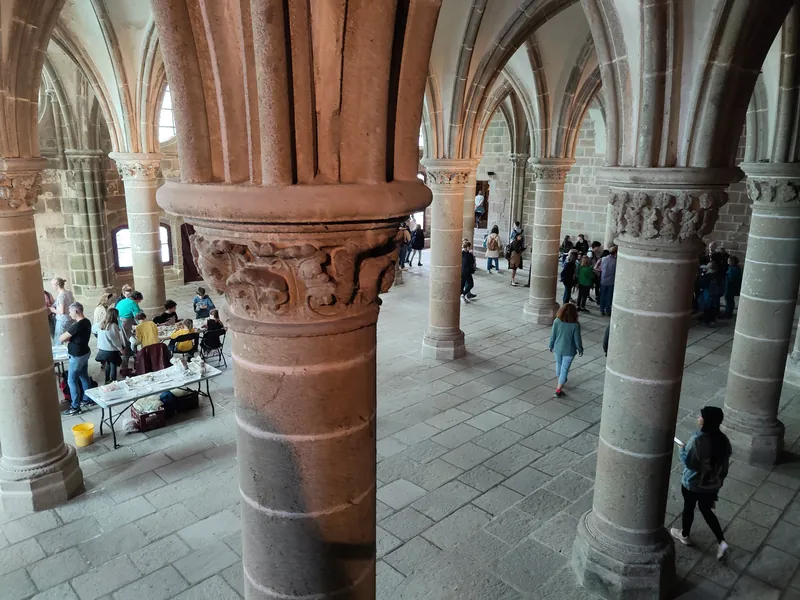
La Merveille
The "Marvel" — three floors of Gothic halls that seem to defy the cliff they cling to.
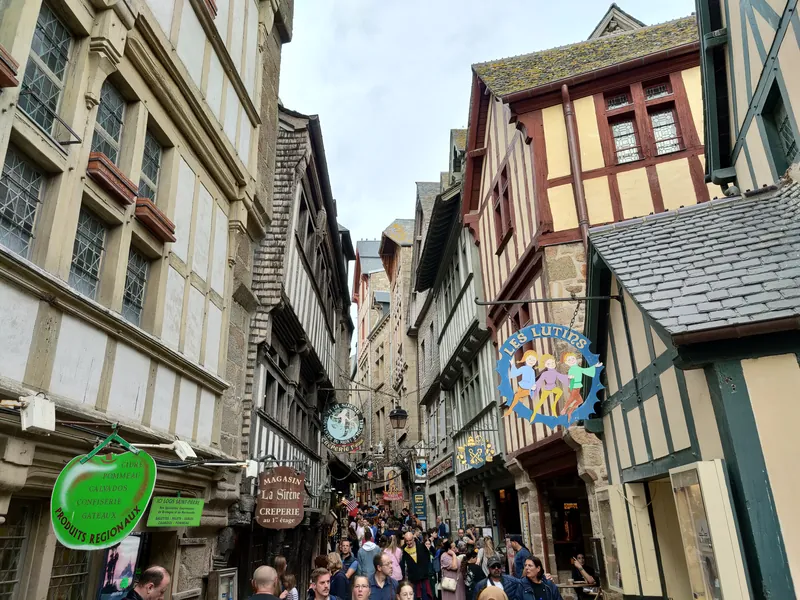
The Grande Rue
The single climbing street where pilgrims, merchants and today's crowds all pass.
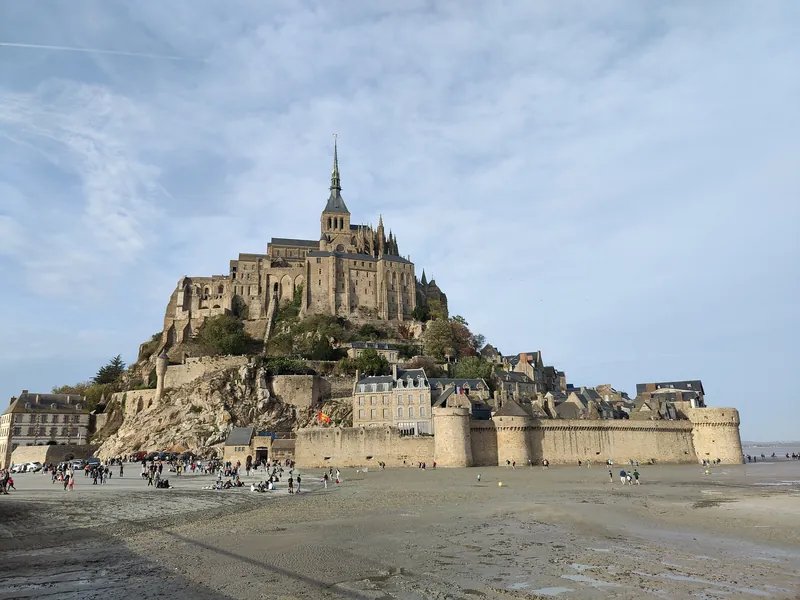
The Ramparts & Bay
Where you watch the fastest tide in Europe race across the sand below.
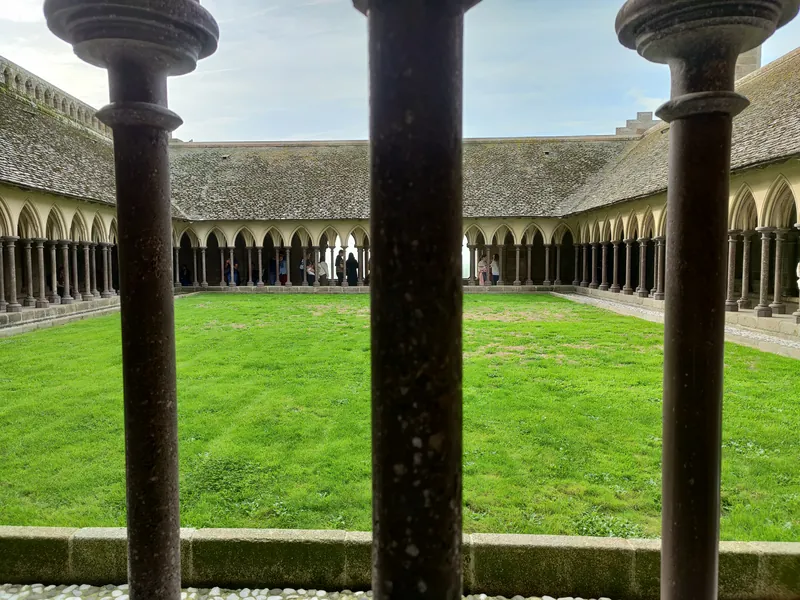
The Cloister
A garden in the sky, where monks walked between two worlds.
The Prison Years
How the sacred Mont spent decades as one of France's most feared jails.
How the Audio Tour Works
Buy the guide
One payment, instant access. No subscription.
Download the app
Get the TouringBee app on iOS or Android and download the tour.
Start at the entrance
Open the guide when you arrive, follow the offline map, and start each story yourself at each stop.
Pause & resume
Go at your own pace, take breaks, and pick up wherever you left off.
Visiting Mont-Saint-Michel
Mont-Saint-Michel Abbey — Entry Ticket
Timed entry · skip the ticket-desk queue · mobile ticket
From €16 · adult entry · instant confirmation
- Reserve a specific entry time and walk past the ticket-desk line
- Mobile ticket — show it on your phone, no printing
- Free cancellation up to 24 hours on most options
Booked through our partner Tiqets. You pay the same price; we may earn a small commission.
Book Tickets & Guided Tours
Prefer to skip the queue or explore with a local expert? Compare our trusted partners — same prices you'd pay direct, booked with confidence.
Some links below are affiliate links (Tiqets, GetYourGuide, Headout, Booking.com). If you book through them we may earn a small commission — at no extra cost to you. It never affects what we recommend.
What Travelers Say
Verified reviews from travelers on Viator and GetYourGuide.
More Audio Tours by TouringBee
Frequently Asked Questions
Is Mont-Saint-Michel free to visit?
The island, village streets and ramparts are free to walk. The abbey interior has a separate paid ticket.
How long do you need at Mont-Saint-Michel?
Plan at least half a day. Two to three hours covers the abbey and ramparts; longer lets you enjoy the tide and the village at a relaxed pace.
Is the audio tour available offline?
Yes. Download it once in the TouringBee app and it works fully offline, with no data needed on the island.
What languages is the audio guide in?
Eight: English, French, German, Spanish, Italian, Portuguese, Polish and Russian.
Does it work on iPhone and Android?
Yes, the TouringBee app runs on both iOS and Android.
How do I get to Mont-Saint-Michel?
By car to the mainland car park then a free shuttle or a 2.5 km walk; by train to Pontorson or Rennes then a connecting bus. From Paris it is roughly four hours.
Why was Mont-Saint-Michel built?
Tradition says the Archangel Michael told Bishop Aubert of Avranches to build a church on the rock in 708. Benedictine monks later raised the abbey, and it grew into one of the great pilgrimage sites of medieval Europe.
Was Mont-Saint-Michel really a prison?
Yes. After the French Revolution the abbey was closed and used as a prison — nicknamed the "Bastille of the seas" — until 1863, before it was restored.
When does Mont-Saint-Michel become an island?
Only during the highest tides, with a coefficient around 100 or more, which happens on a limited number of days each year near the new and full moon. On most days the sea stays out and the bridge is clear.
About the Author

This guide is written by Eugene, who has lived in France for 16 years and worked as a tour guide before founding the travel-content network paris10.travel. Over the years he has explored more than 300 French towns and villages — and written extensively about Mont-Saint-Michel, including the island's TouringBee audio tour. Every date and detail here is checked against official and historical sources, not copied from other pages.
The aim is simple: to leave you more confident, more curious, and better prepared than you were five minutes ago — and, if you want the full story on the spot, to walk it with you through the app.
Walk the Mont With Every Story in Your Ears
Discover the abbey, the tides and the legends they never tell you on the way up.
Get the Audio Tour — from €9.99