
There's no single best time to visit Mont-Saint-Michel — it depends on whether you're chasing mild weather, thin crowds, dramatic tides or low prices. This guide helps you match the visit to your priorities.
At Mont-Saint-Michel the month is only half the decision. The hour you arrive matters just as much: early morning and evening feel like a different island. The TouringBee audio guide can be started at any time, and the map and audio work offline — so you can shape the walk around the quiet hours rather than a group's schedule.
In short: when to go
- Best balance: May–June or September–early October.
- Fewest people: November–March — and, in any month, early morning or evening.
- Warmest, longest days: June–August (also the busiest).
- Most dramatic tides: around the March and September equinoxes.
- Best chance of low prices and availability: off-season and the shoulders (holiday dates excepted).
The best months
Late spring (May–June) and early autumn (September–early October) are the sweet spot: mild weather, greener surroundings, lighter crowds than high summer, with the equinox tides as a bonus.
| Season | Weather | Crowds | Tides |
|---|---|---|---|
| Spring | mild, greening | moderate | spring grandes marées |
| Summer | warm, long days | heaviest | ordinary |
| Autumn | mild then cooler | lighter | autumn grandes marées |
| Winter | cold, short days | quiet | a few strong |
Weekdays vs weekends
Visitors regularly report that the middle of the week is quieter than weekends, especially in the shoulder season. If your dates are flexible, pick a weekday — and check the French school-holiday calendar before you book.
Morning vs evening: the biggest lever
Whatever the month, the hour you choose matters more than the season. Visitors note the same pattern again and again: late morning and midday, the Grande Rue is noticeably denser, while early morning and later in the day the island feels calmer — day tours mostly arrive around the middle of the day and leave in the afternoon. The two ends of the day are transformed: at opening the gates and the Grande Rue are quiet and the light is soft; in the evening, after the coaches go, the town empties and the abbey is floodlit after dark. If you can control only one thing about your visit, control the hour.
One advantage of a self-guided visit is that you're not tied to a group, so you can move against the crowd. The TouringBee island audio walk starts at any time of day and works offline — easy to explore at first light or in the quiet evening hours. One payment, a year's access, no subscription.
Fitting the tides into your timing
The tides add another layer to "when." If you want to see the island ringed by water, look not only at the tide coefficient but also at the exact high-water time for your date: the higher the coefficient, the more dramatic the tide, and the best-known grandes marées fall around the equinoxes. If you're more interested in walking the bay at low tide, that's a separate topic where safety rules matter as much as the hours. Both are covered in our tides guide.
Weather through the year
Spring is mild and variable — pack layers and a raincoat. Summer has the warmest, longest days, handy for early and late visits. Autumn is mild early, cooler and wetter later, with lovely light. Winter is cold, windy, short-dayed and moody under Atlantic skies.
One constant: the bay is always exposed to wind. Visitors regularly underestimate it — even in summer you'll find reports of people having to grab a warm top on the island. A windbreaker earns its place here more than the temperature forecast suggests.
Winter and January
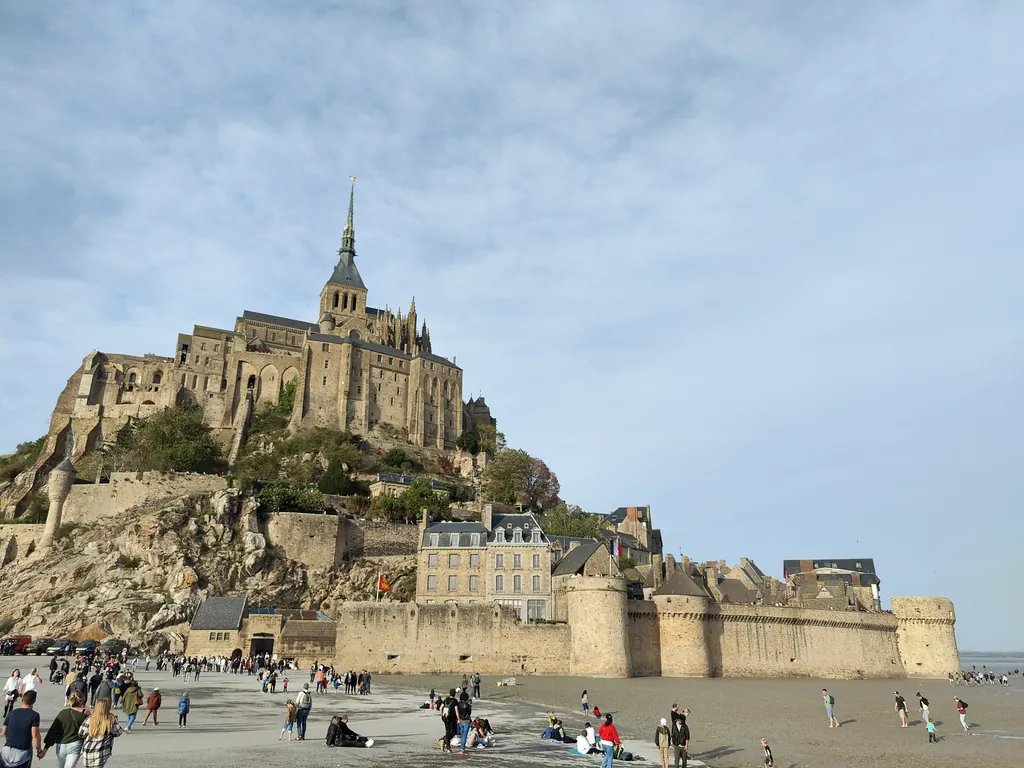
Winter is the quiet season: by many accounts the ramparts can be nearly your own, and the Mont looks dramatic under grey skies. France's own tourism board, France.fr, makes the case for it — out of season, the Atlantic storms return the island to something wild and medieval, and the absence of crowds lets you be alone with the architecture. January is one of the quietest months: cold, windy and short on daylight, but without the summer density. The trade-offs are the cold, the wind and some reduced hours (the abbey has a few annual closure dates). If solitude and atmosphere appeal more than long warm days, winter is a rewarding and underrated time to come.
Sunrise and sunset
Sunrise and sunset are the Mont's best light and its calmest hours. Sunrise especially suits those staying on the island or nearby: before the main wave of day-trippers you can have the ramparts and the Grande Rue. Sunset works for everyone and flows into the floodlit evening; photographers prize the "blue hour" just after, when the granite turns deep blue-violet under the warm lamplight of the walls. Times shift through the year, so check for your dates.
Month by month
| Month | What to expect | Verdict |
|---|---|---|
| Jan–Feb | cold, quiet, short days | for the atmosphere |
| March | season wakes up, spring grandes marées | good for the tides |
| April | milder; holidays affect crowds | good |
| May | mild, longer days | one of the best |
| June | warm, long days | one of the best |
| Jul–Aug | warm, peak visitors | only with the right hour |
| September | warm + big tides | top pick |
| October | quieter, cooler | good |
| Nov–Dec | quiet, cold | for solitude |
By traveler type
| Who you are | When to go |
|---|---|
| First-timer, wants balance | May–June or September, weekday, early morning |
| Photographer | equinox tides, sunrise/sunset in the shoulder season |
| Family with kids | late spring or early autumn, a weekday, mornings — milder and easier to dodge the densest part of the day |
| On a budget | off-season or shoulder, weekday |
| Seeking solitude | winter, especially January, early in the day |
Booking and prices
In summer and on the grande-marée weekends, rooms near the Mont fill faster — especially if you want to sleep inside the walls. The shoulder and off-season usually make it easier to find a place; check current rates for your own dates either way. For the island-versus-mainland trade-offs, see our where-to-stay guide.
Check availability for your dates
Rooms near the Mont go fast in high season — compare and book ahead.
Practical checklist
- Put the hour above the season — early and late are transformative.
- Go midweek and dodge French school holidays where you can.
- Plan around the tide calendar if "the island in the sea" is your goal.
- Pack a windbreaker whatever the month.
- Check winter hours and closures before an off-season trip.
- For sunrise, consider staying nearby overnight (see the hotels guide).
Common mistakes
The usual ones: coming at midday in July and blaming the crowds on the destination; booking a summer weekend when a weekday would be far quieter; wanting the "island in the sea" photo but not checking the calendar and arriving at low tide; assuming winter is "closed" when it's quiet but not shut (do check hours); and not building in the early-morning or evening hours that make the visit.
Frequently asked questions
What is the best time of year to visit Mont-Saint-Michel?
May–June and September–early October offer the best balance of mild weather and thinner crowds, with the equinox tides as a bonus.
When is Mont-Saint-Michel least crowded?
Usually quietest in the low season, November to March, and in any month early in the morning or in the evening; weekdays beat weekends.
Is Mont-Saint-Michel worth visiting in winter?
Yes, if you want solitude and atmosphere and don't mind the cold and short days. January is usually very quiet — just check reduced hours.
What is the best time of day to visit?
Early morning at opening, or the evening after the day tours leave. Midday, especially in summer, is the busiest.
When are the best tides?
Around the spring and autumn equinoxes, when the grandes marées can ring the island with water. Check the tide calendar and the high-water time for exact dates.
Continue exploring
The takeaway
The best time to visit Mont-Saint-Michel is really two choices: the season that suits your priorities and, more importantly, the hour you arrive. Come in late spring or early autumn, go midweek, and catch the island early or late, when it belongs to the few rather than the many. Add a strong tide and you'll see it at its most dramatic.
A self-guided walk starts whenever you do and works offline, so it fits neatly around those quiet hours — begin at first light or after the crowds leave, and let the island tell you its stories while the Mont is at its calmest.
Walk Mont-Saint-Michel at your own pace
Stories written by local historians, on an offline GPS route you start whenever you like.
Get the audio guide — from €9.99~2 hours · offline · one payment · 1 year access
Some links on this page are affiliate or product links (Booking.com, TouringBee). If you buy through them we may earn a small commission — at no extra cost to you. It never affects what we recommend. See our Affiliate Disclosure.